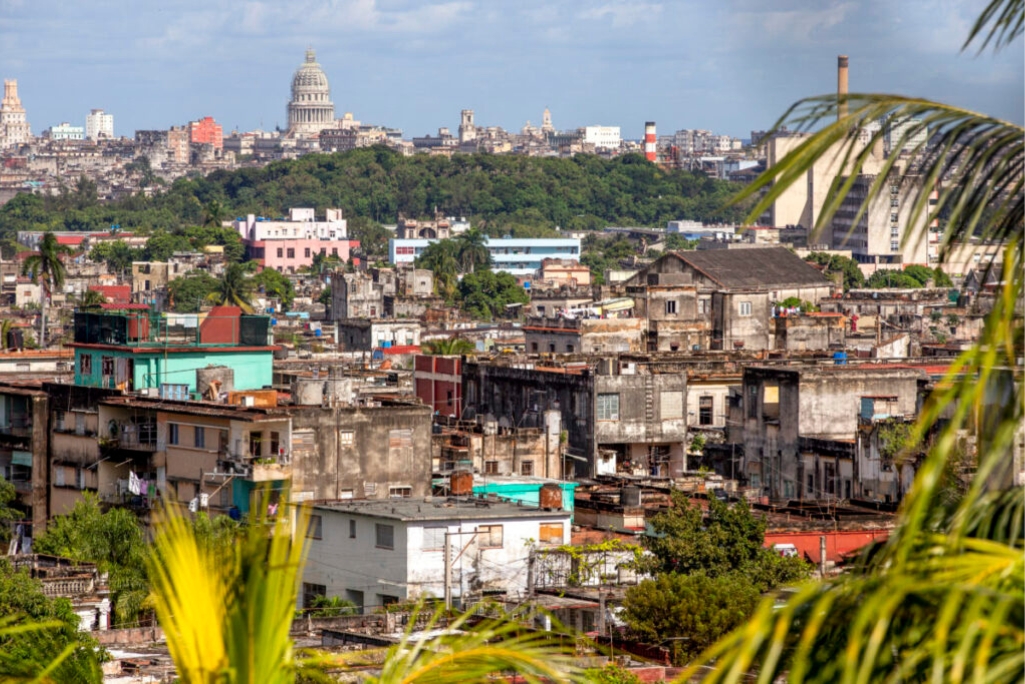
Overlooking part of Havana, Cuba.
HAVANA (BP) — In persistent religious persecution following public protests five years ago, Cuba is cracking down especially on church-sponsored humanitarian aid and prayer, a watchdog group said in a new report.
Religious persecution watchdog Christian Solidarity Worldwide (CSW) documents 667 cases of the Cuban Communist Party (CCP) violating the religious freedom of diverse religious groups, including Protestants and Catholics, five years after the July 2021 protests. Afro-Cuban groups and Jehovah’s Witnesses were also targeted.
“The government appeared particularly concerned with stopping religious leaders from calling on people to pray for Cuba privately or in organized prayer vigils,” CSW wrote in its report. “Religious leaders and their congregations attempting to respond to humanitarian needs, which became even more acute in many parts of the island in 2025 and 2026, were harassed and fined. In many cases, the aid they were attempting to distribute was confiscated.”
Arbitrary detentions, threats, harassment, intrusive surveillance, repeat interrogations, banned attendance at religious services, withholding religious materials from prisoners, barring clergy from visiting prisoners, and physical and verbal abuse of school children because of their religious beliefs were reported. Religious leaders were also served “Actas de Advertencia,” documents deemed to justify future arrests based on violations yet to be committed, CSW said, counting 94 such cases in the study period, January 2025-June 2026.
The 2021 protests in several locations across Cuba initially focused on food and medicine shortages exacerbated by the COVID-19 pandemic but morphed into calls for social and political reform. A humanitarian crisis persists in Cuba today, the United Nations and others have reported.
The CCP continues to neglect public calls for reform five years after the protests, Anna Lee Stangl, CSW director of advocacy and Americas team leader, said July 9 in releasing the report.
Cuba “instead remains intent on rejecting any idea of political or social reform even as Cuba grapples with an increasingly acute humanitarian crisis,” Stangl said in the report titled “Cuba’s New Normal: The Situation of Freedom of Religion or Belief Five Years After 11.”
“We call on the international community to honor the bravery of Cubans across the island, including many religious leaders, who continue to speak publicly and honestly about the situation in the country by amplifying their voices and seeking creative and coordinated ways to support them.”
Often, the CCP perceives prayer as a political threat, CSW said.
Among individual cases, CCP officials presented an Actas de Advertencia in October 2025 to the leader of a registered Protestant church, forbidding him from holding prayer vigils on any subject. When the pastor expressed his intention to continue holding prayer meetings, the police officer committed to monitoring and visiting the pastor’s home monthly through October 2026.
In detailing cases of arbitrary detention, CSW writes of Alexis Padrón Lorenzo, a pastor of the Communion in Faith Church who has been detained since June 10. Lorenzo was detained, physically abused, interrogated and accused of public disorder, CSW wrote, and remained incommunicado, at least through July 9. Jonathan David Muir Burgos, the 17-year-old son of the pastor of an unregistered church, was detained more than three months at a maximum security prison on allegations of participating in peaceful protests, CSW said. Burgos was transferred to house arrest June 24.
CSW recommended remedies to Cuba and the international community, including the U.S., the European Union and its member states, the United Kingdom, and the U.N. and its member states.
“It is now even more vital that governments around the world, and especially Cuba’s friends and neighbors in Latin America, emphatically voice concerns about Cuba’s consistent violations of human rights, including FoRB (freedom of religion or belief), and seek ways to support independent civil society in Cuba, including religious groups,” CSW wrote. “The European Union and the United States, for their part, must actively seek ways to support independent civil society in Cuba and coordinate with each other.”
Multilateral engagement is critical, CSW said, as Cubans pursue political and social change, including religious freedoms.
(EDITOR’S NOTE — Diana Chandler is Baptist Press’ senior writer. Access the full 17-page report here.)