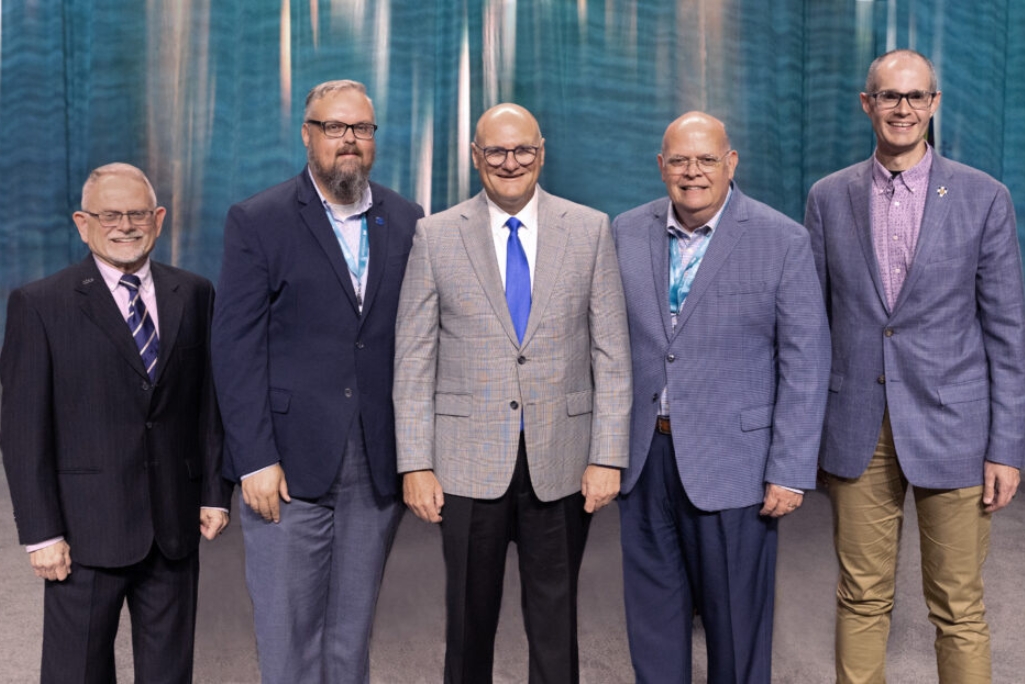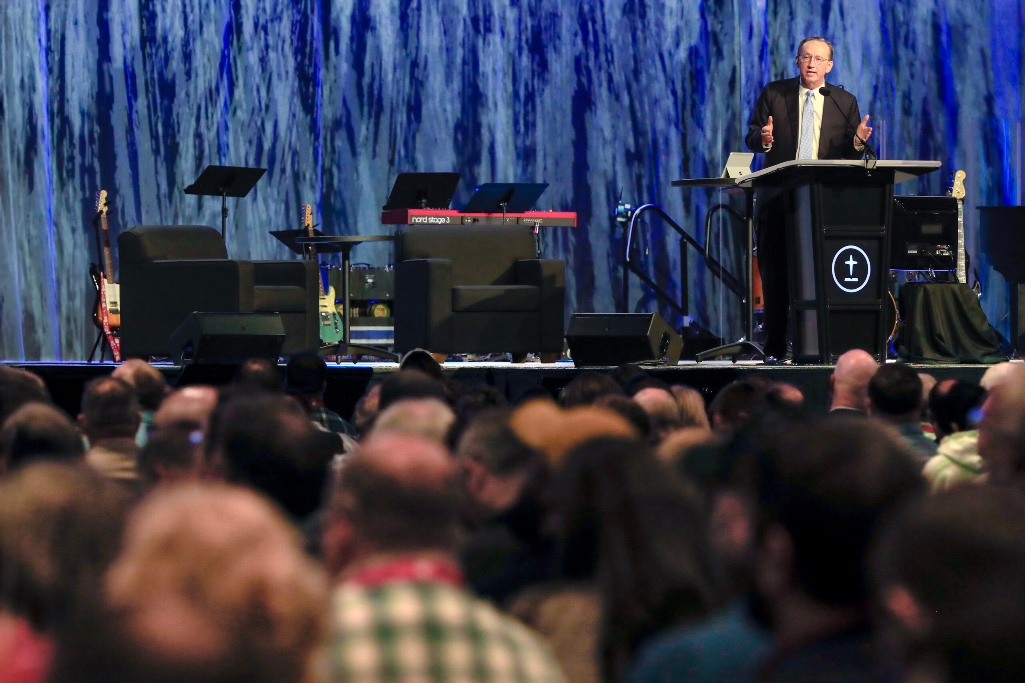
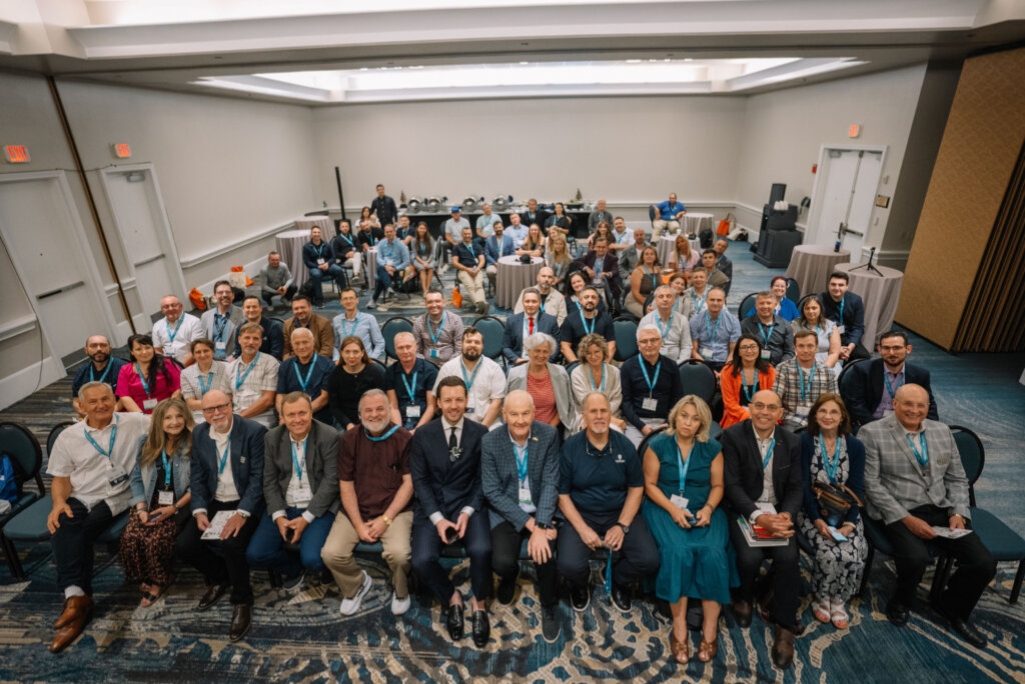
More than 100 people attend the 2026 national Slavic Baptist Fellowship gathering as part of activities concurrent with the 2026 SBC annual meeting.
ORLANDO (BP) – In late May, at least 25 Slavic churches in Florida were unaffiliated with any denomination. In mid-June, they were introduced to the expansiveness of the Southern Baptist Convention (SBC), with its 47,000 churches plus the North American Mission Board and International Mission Board (IMB), its colleges, universities and seminaries.
Ivan Mileyev, retired church planting catalyst for NAMB, and others had searched for months among the 193,736 Russians, Ukrainians and others from the former Soviet Union living in Florida since the early 1990s or as far back as 1910, according to Migration Policy’s data. The Florida Baptist Convention includes six “Russian” churches among its 2,759 affiliated congregations, according to the Ethnic Research Network.
“We want them (other Slavic churches) to be involved and to know more about Southern Baptists,” Mileyev told Baptist Press (BP). “I tell these (nonaffiliated) pastors, ‘You should be part of the family. We are missions-minded, kingdom-minded,” said Mileyev, the immediate pastor and president of the Pacific Coast Slavic Baptist Association.
The Slavic Baptist Network invited Florida Slavic pastors to its third annual national event, which took place June 9 as one of the activities related to the 2026 SBC annual meeting. More than 100 gathered, the largest number so far, according to California church planter Bogdan Kipko. He serves as a liaison for Send Network to the Slavic speaking community.
“More than simply hosting a fellowship gathering,the purpose was to strengthen relationships, introduce pastors to the ministries and resources of the SBC, and encourage greater participation in church planting, missions, leadership development, and theological education,” Kipko said.
He called the pastors to look for ways to partner with the IMB and NAMB.
The Send Network now has a streamlined assessment process in Russian for Slavic church planters, Kipko said.
The evening, sponsored by the IMB and NAMB, included worship led by Pavel Marchenko, worship pastor of Church Spasenie (Salvation Church) in Winter Park, Fla.
Kipko said it was especially moving when the group sang What a Friend We Have in Jesus in both English and Russian. “It was a beautiful picture of unity around one mission: planting churches, sending missionaries, and advancing the Gospel together,” he said.
Among the evening’s highlights were two panel discussions. One was about theological education offered in Russian, including an online M.Div. degree in Russian available worldwide through Temple Baptist Theological Seminary, a division of Brewton-Parker Christian University in South Georgia. The other was on ways Slavic pastors and leaders can integrate into the SBC, NAMB and IMB for the advancement of the Great Commission.
The evening’s SBC guests included Charles Grant, the SBC Executive Committee’s vice president for convention relations. John Barnett, Mick Stockwell, and Ivan Mileyev presented IMB’s vision for mobilizing Slavic churches in global missions and diaspora ministry. Bogdan Kipko explained how Send Network and NAMB are helping churches plant churches throughout North America. Alexander Stewart spoke for Gateway Seminary. Mark Gregory and Steve Echols for Temple/Brewton-Parker; and Myles Dowdy for the Florida Baptist Convention.
“If there is one story behind this gathering, it is this: God is raising up a new generation of Slavic Southern Baptist churches that are moving from being observers of SBC ministry to becoming active participants in planting churches, sending missionaries, developing leaders, and advancing the gospel,” Kipko, a fourth-generation pastor from Kazakhstan, told BP.
“They are becoming active participants by planting churches, serving as missionaries, mentoring younger leaders, and helping shape the future of gospel ministry across North America,” he said.
The Slavic Network primarily consists of churches and ministry leaders whose roots trace back to the countries of the former Soviet Union and whose ministries are conducted primarily in the Russian or Ukrainian language. The largest communities represented include Ukraine, Russia, Belarus, Moldova, Kazakhstan, Kyrgyzstan, Uzbekistan, Latvia, Lithuania and Estonia, along with immigrants from several other former Soviet republics now serving in churches across North America.
Lifeway’s ACP database lists 115 churches with Russian, Ukrainian, Slavic or Slavik in their names — up from 106 last year — but with many not using any of those words, it is estimated at least 200 Southern Baptist churches were started in the U.S. by Slavic immigrants, who have centuries-long connection with Christians.
“Slavic believers have a unique advantage in missionary service, as they are, in practice, already bilingual and bicultural,” Mileyev said.
(EDITOR’S NOTE — Karen L. Willoughby is a national correspondent for Baptist Press.)